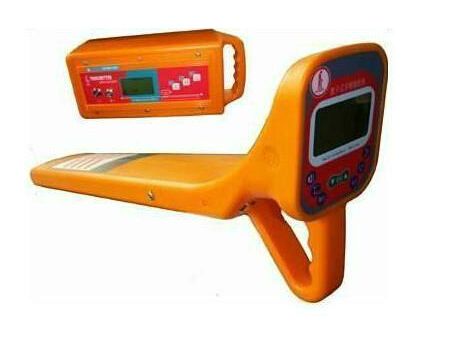
Detection Principle of Concealed Pipe Detector
Yangzhou Darni
First, the concealed pipe detector transmits high-frequency electromagnetic waves underground through a transmitting antenna, and receives the electromagnetic waves reflected back to the ground through a receiving antenna. When the electromagnetic waves encounter interfaces with electrical differences during propagation in underground media, they reflect. Based on the waveform, amplitude intensity, and time variation characteristics of the received electromagnetic waves, the spatial position, structure, shape, and burial depth of underground media are inferred.
Second, the concealed pipe detector in underground concealed pipe detection, the relative dielectric constant of water flow or air in the pipe increases, which differs significantly from the relative dielectric constant of other media (such as soil). This produces characteristic images with lower reflection frequency and higher reflection amplitude on the radar profile, thereby inferring the spatial position, range, and burial depth of the concealed pipe.
The concealed pipe detector can determine the location of metal or non-metal pipes, sewers, cables, cable ducts, holes, foundation layers, steel bars in concrete, and other underground buried objects.