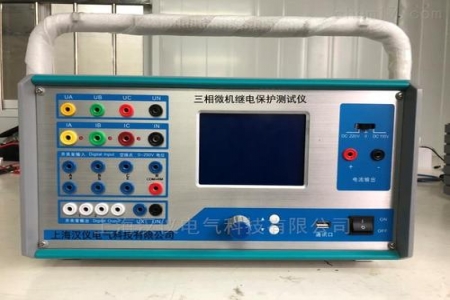
A simulated partial discharge tester is an instrument specifically designed to detect partial discharge phenomena in power equipment. Partial Discharge (PD) is a common early fault phenomenon in the insulation system of power equipment. The simulated partial discharge tester helps maintenance personnel identify these potential fault points in a timely manner, thereby preventing sudden accidents in the power system.
Working Principle
The working principle of the simulated partial discharge tester is based on the detection of changes in the electromagnetic field generated during the partial discharge process. When partial discharge occurs, it is accompanied by the emission of electromagnetic waves. These signals are captured by specific sensors, then undergo preprocessing such as amplification and filtering, and finally are presented through a display unit.
The specific detection process includes the following aspects:
Sensors: Different sensors are used to capture signals generated by partial discharge, such as electric field sensors, magnetic field sensors, ultrasonic sensors, etc.
Signal Processing: The captured signals are amplified by amplifiers and filtered to remove interference signals.
Display and Analysis: The processed signals are displayed on a screen, and technicians can judge the partial discharge situation based on the displayed waveforms and values.
Technical Features
The technical features of the simulated partial discharge tester include:
High Detection Sensitivity: Capable of capturing weak partial discharge signals.
Wide Applicability: Suitable for various types of power equipment, including transformers, cables, switchgear, etc.
High Signal-to-Noise Ratio: Advanced signal processing technology effectively reduces noise interference.
Large Dynamic Range: Able to adapt to partial discharge phenomena of different intensities.
**Multiple Frequency Band Combinations