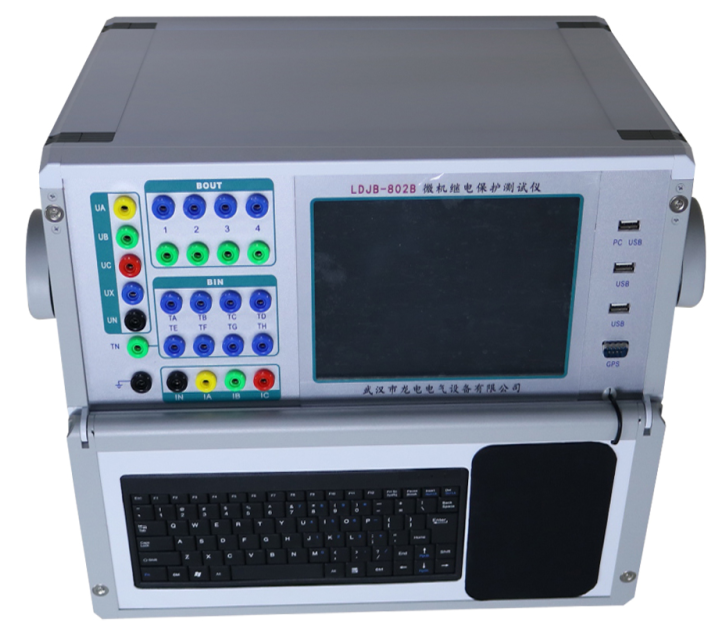
, which can effectively detect partial discharge phenomena in power cables, thereby assessing the insulation condition of the cable and predicting potential faults. Below is some information and technical methods about partial discharge detection for power cables:
Basic Concepts
Partial Discharge: During the operation of power cables, when the electric field strength in the insulation material reaches a certain value, partial discharge phenomena will occur inside or on the surface of the insulation material.
Partial Discharge Measurement: By detecting the signals generated by partial discharge, the insulation condition of the cable is evaluated.
Measurement Methods
Pulse Current Method:
Determines the amount of partial discharge by measuring the pulse current caused by partial discharge.
The basic unit of measurement is usually picocoulombs (pC).
Basic Test Circuit:
U~: AC test power supply.
Z: Power filter, used to prevent interference and discharge pulse waves from the high-voltage power supply from entering the test circuit.
Ck: Coupling capacitor, used to connect the tested cable to the measurement system.
Cx: Cable equivalent capacitance, the larger the ratio of Ck/Cx, the higher the measurement sensitivity.
Zm: Measuring impedance, a key component connecting the tested cable and the instrument, ensuring the sensitivity of high-frequency pulse signals and filtering out the test voltage.
Measuring Impedance (Zm):
Usually has three forms: resistance (R), resistance-capacitance (RC), and resistance-inductance-capacitance (RLC).
Other Detection Techniques:
Very Low Frequency (VLF) Detection: Used for medium-voltage cables.
Series Resonance Detection: Used for high-voltage cables.
Time Domain Reflectometry (TDR): Used for locating partial discharge sources.
High-Frequency Current Transformers: Used for detecting XLPE cables in substations, can be clamped around the grounding wire.
Multi-Sensor Joint Detection: Utilizes the advantages of different sensors to improve the accuracy and effectiveness of detection.
Live Testing: Can be performed without power outage.
Detection Process
Preparation: Ensure all test equipment is calibrated and in good condition.
Selection of Detection Technique: Choose the most appropriate detection technique based on cable type and actual conditions.
Implementation of Detection: Conduct partial discharge detection according to the selected method.
Data Analysis: Carefully analyze the detection results to determine the location and severity of partial discharge.
Maintenance Recommendations: Develop a maintenance plan or repair measures based on the detection results.
Precautions
Interference Factors: During partial discharge detection, attention should be paid to avoiding various interference factors, such as electromagnetic interference and mechanical vibration.
Data Interpretation: The results of partial discharge detection need to be analyzed and interpreted by professionals to determine the extent and possible causes of partial discharge.
Conclusion
Partial discharge measurement of power cables is a process involving multiple techniques and methods, aimed at ensuring the safe and stable operation of the power system. Correctly selecting and using appropriate detection tools and techniques is crucial for ensuring the safe operation of the power system. If you need more detailed technical parameters or operating guidelines, please inform me of the specific details so that I can provide more precise assistance.