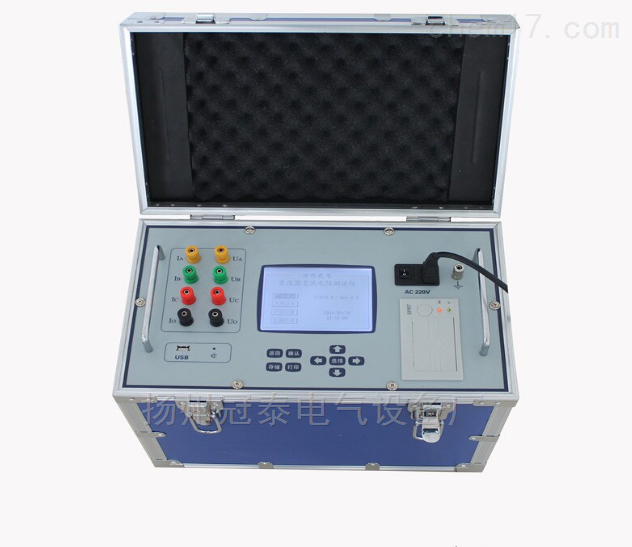
What are the precautions when using a DC resistance tester? The DC resistance tester is mainly used to test the DC resistance value of high-voltage electrical equipment such as power transformers. It has many characteristics such as fast testing speed, high accuracy, convenience and flexibility, and portability. It has always been a relatively popular equipment among many power workers. However, since it is high-voltage power testing equipment, for the safety of personnel and equipment, there are many points that need special attention during use. This article takes the YTC316-10DC resistance tester as an example to briefly introduce the precautions when using a DC resistance tester.
1. When selecting the current, refer to the range in the technical specifications column, and do not use it beyond or below the range. When exceeding the range, since the current cannot reach the preset value, the instrument remains in the "charging" state. When below the range, "current too small" is displayed. When these two states occur, confirm the range and select an appropriate current for testing.
2. Before disconnecting the wires, be sure to wait for the instrument to reset, and after there is no current output, turn off the power before disconnecting the wires.
3. When connecting the test clips to the lead-out terminals of the transformer winding, note that the lead-out terminals are exposed to the air for a long time, and the surface of the lead-out terminals is covered with an oxide film. This oxide film may cause unstable or inaccurate measurement results. Therefore, when wiring, pay attention to cleaning the oxide film, or after the test clips are connected to the lead-out terminals, twist the test clips forcefully a few times to break the oxide film and ensure good connection.
4. When disconnecting the short-circuit points of the three wires in the magnetic assist method after discharge is completed, there may be residual current. When removing them, spark discharge may occur, which is a normal phenomenon.
5. When using the magnetic assist method, pay attention to the range. Because the high-voltage coil has two in parallel plus one in series, 1.5 times the high-voltage coil resistance is added to the entire test loop. When selecting the range, this must be taken into account. If the range is exceeded, the output current cannot reach the set value or the output current is unstable.
6. When selecting the current, refer to the range in the technical specifications column, and do not use it beyond or below the range. When exceeding the range, since the current cannot reach the preset value, the instrument remains in the "charging" state. When below the range, "current too small" is displayed. When these two states occur, confirm the range and select an appropriate current for testing.
7. Before disconnecting the wires, be sure to wait until the discharge is completed and the alarm sound stops. It is best to wait more than 10 seconds before disconnecting the wires to ensure that the charge is completely released.
8. When testing the no-load tap changer transformer, be sure to reset before switching the tap. After the discharge is completed and the alarm sound stops for more than 10 seconds, can the tap be switched.
Generally speaking,DC resistance tester as a relatively conventional power detection equipment, has been on the market for more than ten years, and the technology has been relatively mature. However, power workers should not be careless in actual work. Before use, they need to read the manual carefully and pay attention to the above matters, so that they can get twice the result with half the effort.