

In power testing work, it is inevitable to encounter the two major concepts of series resonance and parallel resonance, which are easily confused. So what exactly is the difference between series resonance and parallel resonance?
To clarify the difference between series resonance and parallel resonance, one must first understand what the resonance phenomenon is. Generally, in an AC circuit containing resistance, inductance, and capacitance, due to a certain distance between the two ends of the circuit, the voltage and current are different. However, if the circuit parameters or the frequency of the power supply are adjusted so that the voltage and current at the two ends are in phase, the circuit will exhibit resistive characteristics, and the state of the circuit at this time is resonance.
The resonance phenomenon has wide applications in general communication engineering, but in power systems, resonance can potentially hinder the normal operation of the power system.
Series resonance refers to the phenomenon in a series circuit of resistance, inductance, and capacitance where the current and voltage at the two ends of the circuit are in phase. The condition for series resonance is that voltage and current are in phase, and the resonant frequency is
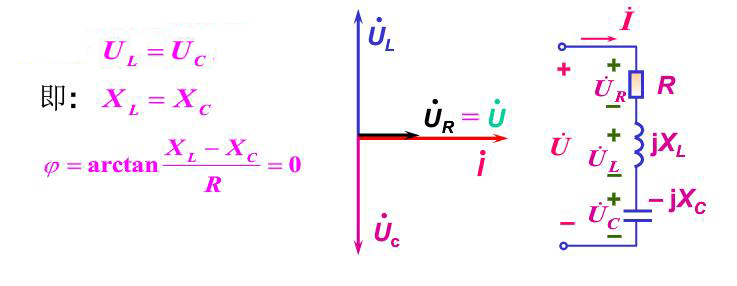
The characteristics of series resonance are that the total impedance is small, and when the power supply voltage is constant, the current is large. At the same time, the circuit is resistive, and the voltage across the capacitor or inductor may be higher than the power supply voltage.
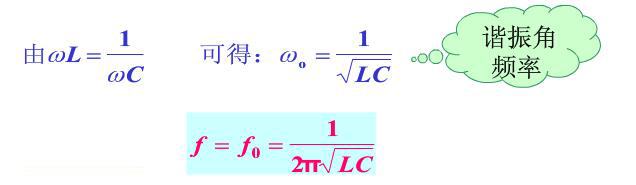
Parallel resonance refers to the phenomenon in a parallel circuit of resistance, capacitance, or inductance where the voltage at the circuit terminals and the total current are in phase, which is parallel resonance. The principle is as follows:
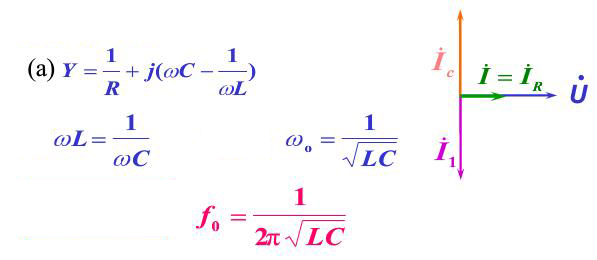
The characteristics of parallel resonance are that when the voltage is constant, the resonant current is small, while the impedance is large, the circuit is resistive, and the total current may be less than the branch current.
In actual work, one should analyze the resonance principle to maximize strengths and avoid weaknesses. Of course, a simple and effective method is to use the newly developed series resonance equipment by Hubei Yitiancheng, which can make your work twice as effective with half the effort.
