

Analysis and Handling of DC System Ground Faults
The DC system is an important component of a power plant, responsible for supplying power to control circuits, signal circuits, relay protection, automatic devices, and DC lubricating oil pumps, sealing oil pumps, lighting, and other equipment during emergencies. The DC system plays a crucial role similar to the control nerves in the human body, and is vital for ensuring the safe operation and reliable disconnection of power generation and supply equipment.
When a single ground fault occurs in the DC system, since there is no short-circuit current, the fuse will not blow, and the system can continue to operate, but it must be handled promptly; otherwise, when another ground fault occurs, it may form a ground short circuit, causing relay protection, signals, and automatic devices to malfunction or refuse to operate, or causing the DC fuse to blow, resulting in loss of power to protection, automatic devices, and control circuits. Two-point grounding on the same polarity may also short-circuit certain relays, preventing them from operating and tripping, or causing tripping to skip levels, thereby damaging equipment, expanding the scope of the fault, and seriously threatening the safe operation of the system. Positive pole grounding in the DC system may cause protection malfunction, while negative pole grounding may cause protection failure to operate.
1 Fault Phenomenon
On June 12, 2010, the insulation monitor of the 110V DC system in a power generation company (2*640MW units) issued a ground alarm, showing that the negative pole to ground resistance was 0Ω, and the ground branch could not be determined. On-site, a multimeter measured the negative pole to ground voltage as 0.2V and the positive pole to ground voltage as 116.8V, indicating that this ground fault was a direct negative pole grounding. At that time, one unit was under maintenance, and only one unit was in operation in the entire plant, so the risk of troubleshooting was high. If two points in the DC system were grounded simultaneously, it could cause relay protection devices, automatic devices, etc., to malfunction or refuse to operate, and fuses to blow, bringing greater risks and hidden dangers. The company decided to immediately form a ground fault search team to carry out the search for the grounding point.
2 Analysis of Possible Causes of the Fault
The ground fault search team discussed the fault and determined that the possible causes might include the following:
1) Hidden faults left over from construction. During construction, faults hidden due to construction and installation issues, because of the characteristics of the DC system, are not easy to control and detect in the early stage of operation. The longer the operation time, the greater the probability of system ground faults.
2) External force damage. During operation, DC circuits inevitably suffer damage from external forces such as squeezing, movement, and improper washing by inspection and maintenance personnel. Since Unit #1 was under maintenance and construction at the time of the fault, and the workload of laying cables was large, this cause was set as the primary search target.
3) Cable quality issues. Due to the uneven quality of DC cables supplied in the market, poor-quality DC cables become a hidden danger for DC ground faults.
4) Natural causes. The DC system in a power plant has many connected devices and complex circuits. During long-term operation, DC ground faults may occur due to changes in environment and climate, aging of cables and connectors, and problems with the equipment itself. Since the weather was clear and humidity was moderate at the time of the fault, weather-related DC grounding could be ruled out. However, because the environment for thermal control loads in the DC system is relatively harsh, this cause was also set as a primary search target.
5) There are three reasons why the insulation tester did not report the branch: grounding on the DC system bus section; simultaneous grounding on both sections of the DC system; or grounding of loads inside the thermal control power cabinet.
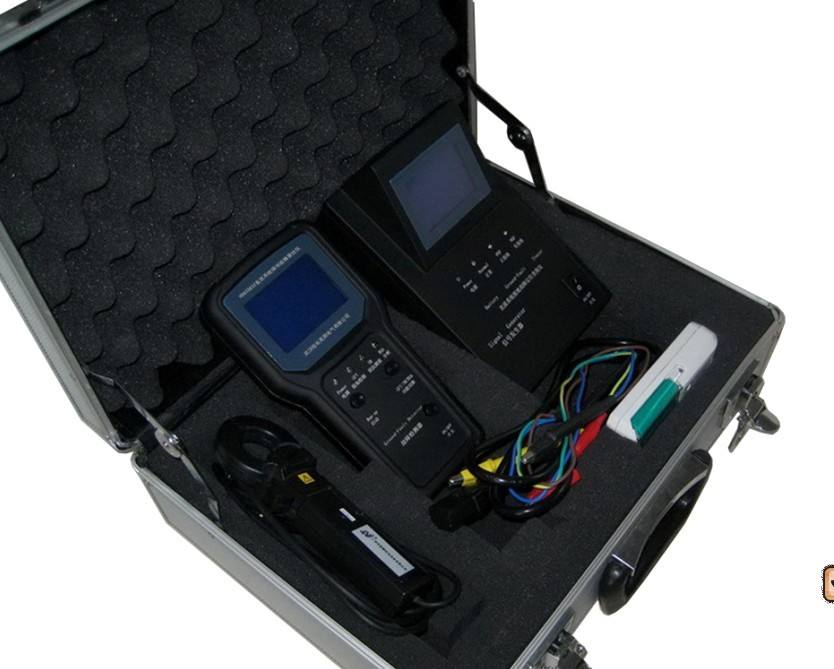
3. Common Fault Finding Methods
Common fault finding methods include:
1) Determine whether the positive or negative pole is grounded by measuring the voltage of the positive and negative poles to ground.
2) Distinguish between the two bus sections to prevent the grounding search scope from expanding.
3) Deactivate the DC insulation tester that has false alarms during operation.
4) Immediately stop construction or maintenance tests on secondary circuits and disconnect their power supply to see if the signal disappears.
5) Use the sectional circuit-breaking method to determine the DC grounding point. When using this method, the operating power must be supplied by the battery. First, disconnect unimportant circuits, such as signal circuits and lighting circuits. Since once the DC grounding circuit is separated from the DC system, the positive and negative pole voltages to ground of the DC system bus will become balanced, the method of momentarily disconnecting the DC grounding circuit is usually used to determine the DC grounding point, which is the so-called "circuit-breaking method." However, since the DC system is an uninterruptible power supply, people cannot arbitrarily disconnect it, and the "circuit-breaking method" often causes accidents such as tripping of DC system control or protection circuits.
