

The quality of a battery discharge tester is usually judged by its electromotive force and internal resistance.
Electromotive force refers to the potential difference between the positive and negative terminals of the battery discharge tester when the external circuit is open.
Internal resistance refers to the resistance presented inside the battery discharge tester during charging and discharging. When the battery is being charged, if the voltage rises quickly, and when it is being discharged, if the terminal voltage drops quickly, it indicates that the internal resistance of the battery discharge tester is large, and its capacity is small, making it a bad battery.
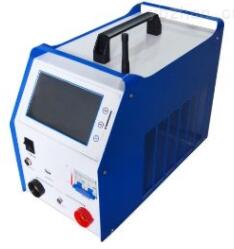
In addition, if the electromotive force of the battery discharge tester is normal, but when tested with a battery discharge tester, it shows very small or zero, then the plates inside the battery discharge tester have fallen off; this battery is a scrapped battery.
An important factor affecting the service life of the battery discharge tester is the ambient temperature. Generally, the required ambient temperature for a battery discharge tester is between 20-25°C. Although an increase in temperature improves the discharge capacity of the battery, the price paid is a greatly shortened battery life.
According to test measurements, once the ambient temperature exceeds 25°C, for every 10°C increase, the battery life is shortened by half. Currently, the battery discharge testers used in UPS are generally maintenance-free sealed lead-acid battery discharge testers, with a typical lifespan of 5 years, which can only be achieved under the required environmental conditions. If the specified environmental requirements are not met, the lifespan will vary greatly.
In addition, an increase in ambient temperature will enhance the chemical activity inside the battery, generating a large amount of heat energy, which in turn raises the surrounding temperature. This vicious cycle will accelerate the shortening of the battery's life.
