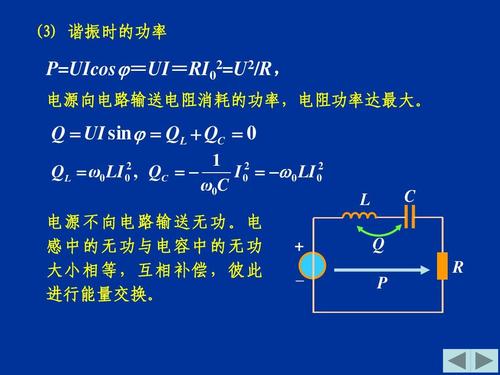
The conditions for reaching resonance mainly involve that the oscillation phenomenon in the circuit may gradually disappear or may persist unchanged. When the oscillation persists, we call it equal-amplitude oscillation, also known as resonance. The time for the voltage across the capacitor or inductor to change one cycle during resonance is called the resonance period, and the reciprocal of the resonance period is called the resonant frequency. This is how the resonant frequency is defined. It is related to the parameters of capacitance C and inductance L, that is: f=1/(2*π*√LC), and the corresponding angular frequency w=2*π*f=1/√LC.
Because of self-resonance, before the resonant frequency point, the impedance decreases as the frequency increases, while after the resonant frequency point, the impedance increases as the frequency increases. Therefore, when using capacitor filtering, the frequency points to be filtered out should first be before the resonant frequency point, and also near the resonant frequency point. In practice, the lead inductance of a capacitor is affected by many factors, such as pin length, vias, PCB routing, etc.
<p style="margin: 17px 0px; padding: 0px; line-height: 28px; color: rgb(51, 51, 51); font-family: " pingfang="" sc",="" "lantinghei="" "microsoft="" yahei",="" arial,="" 宋体,="" sans-serif,="" tahoma;="" font-size:="" 16px;"=""> So, that is to say, this resonance is caused by the capacitor in the circuit and will interfere with the circuit. Since it is an additional interference in the circuit, we need to consider filtering it out.