

The unprecedented integration of instruments and computer technology. First, more and more instruments are choosing platforms based on Windows software and Intel chips, adopting Windows GUI and military-standard-based software, replacing internal operating software with Windows software, and easily connecting with MS Office applications to fully utilize their capabilities. It is easy to freely download and upgrade new software versions from the Internet, and Windows Help improves the convenience of learning instrument operation. At the same time, touch screens are widely used, voice control can solve the problem of operating instruments when both hands are occupied, network control of instrument operation, and test automation is achieved based on MS Windows and MS Visual Studio. In addition, the VBA software inside the instrument can effectively help realize test automation in the production process.
Secondly, due to the extensive application of computer technology in instruments, instruments have more advanced connectivity, and also have standard pointing devices (mouse, trackball, touch keys, joystick, etc.) and other components (keyboard, CD RW drive, parallel interface for direct connection to printer, VGA output for external monitor, internal hard drive, etc.). It is particularly worth mentioning that in special industries such as military, the security and confidentiality of test data are particularly important. After completing test tasks in the laboratory, staff can remove the hard drive and transport the instrument alone to the test site (such as battlefield), then the operator takes out the hard drive carried with them, installs it into the instrument, and then performs on-site measurement, thus ensuring data security and confidentiality.
The performance of instruments is more excellent, measurement functions are more powerful, and the measurement accuracy, test sensitivity, and dynamic range of measurement have reached unprecedented heights. In addition, more powerful measurement functions are endowed in a single instrument. ESG/PSG vector signal generators can flexibly generate signals including continuous wave/AM/FM/phase modulation/pulse modulation, all standard communication protocols (SM/EDGE/WCDMA/TD-SCDMA/CDMAOne/CDMA2000/CDMA2000 1X EV/Bluetooth/WLAN/PHS/PDC/NADC/DECT/TETRA, etc.), arbitrary waveforms and other signals for future use; MSO mixed signal oscilloscopes (2/4 analog measurement channels + 16 logic analysis channels) enable a single instrument to have both oscilloscope and logic analyzer functions; Infiniium oscilloscopes with built-in VSA vector signal analysis software have also become vector signal analyzers with wide measurement analysis bandwidth in the world.
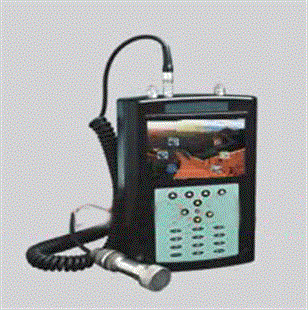
Test and simulation software are widely used in instruments
With the continuous increase in computer processing speed and data processing capabilities, and the widespread application of computer simulation technology, the combination of instrument hardware with test software and simulation software is becoming increasingly close. First, the modular design of hardware allows different hardware module combinations with different software to form instruments with different functions and different test solutions. In addition, VXI-structured test instruments more fully explain the flexible configuration and application of modular structured instruments.
Secondly, the concept of software-defined radio has a new interpretation and practical application. The 89601A vector analysis software is a good example of realizing this concept. It uses the powerful mathematical computation and data processing capabilities of computers to fully present a large number of digital signal processing functions and data analysis functions in computer software. By combining with different data acquisition front-ends (such as VXI-structured vector signal analyzers, spectrum analyzers, Infiniium digital oscilloscopes), it can combine into vector signal analyzers with different functions.
At the same time, the captured signals and data analysis results can be used as data input sources for EDA simulation software to drive ADS advanced design simulation software for component and system-level simulation; and the simulation results of ADS advanced design simulation software can be sent to ESG/PSG vector signal generators to generate signals, which are captured and analyzed by VSA vector signal analyzers, in turn enabling data verification between product design and real products, that is, realizing the organic combination of design, simulation, measurement, and verification. The dynamic linking of test instruments (including spectrum analyzers, network analyzers, signal sources, oscilloscopes, logic analyzers, etc.) achieves the organic combination of measurement domain and simulation domain, bridging between design, simulation, and verification, thereby accelerating design, improving design quality, perfecting hardware-in-the-loop simulation methods for systems and components, and achieving the goal of rapidly expanding measurement solutions to meet needs.
Development history and current status of automatic test systems
With the continuous improvement and enhancement of measurement instrument functions, the formation and development of related automatic test systems (especially military ATS test systems) have also experienced the development process from desktop instrument ATS systems to card-based instrument ATS systems, and from card-based instrument ATS systems to mixed ATS systems of card-based and desktop instruments. Up to now, the combination of VXI-structured instruments (mainly for large channel count digital signal measurement) and GPIB-standard desktop instruments (mainly for performance-critical RF/microwave signal measurement) to form ATS test systems has become the mainstream principle and model commonly followed by military ATS test systems. This is closely related to the advocacy by military users represented by the United States in the 1990s to use COTS (Commercial Off-the-Shelf) popular commercial instruments to build military ATS test systems, which can greatly reduce the cost of building, developing, maintaining, replacing, and upgrading the entire test system.
However, due to the relatively long development and certification cycles in the military industry, the system maintenance and support cycle is usually 10 to 20 years. While civilian technology is advancing rapidly, the update speed of popular commercial instruments is getting faster and faster. Some COTS products have been discontinued and stopped production before being widely used in the military industry. The maintenance and support of finalized test systems has become a major problem for military customers, especially the maintenance, support, and update of test software (TPS) developed based on specific hardware. This problem is also encountered in the Chinese customer base. How to achieve hardware interchangeability and software interoperability has become the key to ensuring the vitality and life cycle of the entire system. At the same time, military ATS test systems must also meet the requirements of reliability, mobility, and flexibility, and reduce development and maintenance costs as much as possible, save human resources, improve the efficiency of on-site replacement and maintenance center replacement of hardware, and improve the strategic requirements of weapon systems to quickly respond to regional and even global support.
Next-generation automatic test systems: standards for next-generation test technology and test systems
In the past year, users and instrument manufacturers led by the United States have proposed a new test instrument concept and technology to solve the problems caused by COTS instruments and meet the development requirements of future test systems. This technology is called NxTest, which is a LAN-based modular synthetic instrument.
LXI (LAN eXtensions for Instruments) not only provides embedded measurement technology for rack-and-stack instruments and PC standard I/O connectivity, but also realizes the modularity of card-based instrument systems and reduces size. For R&D and manufacturing engineers developing electronic products for aviation/defense, automotive, industrial, medical, and consumer electronics markets, LXI's compact and flexible packaging, high-speed I/O, and reliable measurement functions effectively meet their needs. The VXI bus provides an ideal standard for all high-density, high-speed applications, while LXI combines the advantages of VXI and Ethernet to provide users with a high-performance instrument platform that meets applications typically not met by VXI. The LXI structure based on LAN, for example, lays the foundation for the realization of long-life instruments in the aviation and defense industry. LXI has no bandwidth, software, or computer backplane structure limitations. It can leverage the increasing Ethernet throughput to provide ideal solutions for engineers facing the challenges of next-generation automatic test systems.
The LXI standard will be managed by the LXI Consortium, a non-profit organization composed of major test and measurement companies. The group's goal is to develop, support, and promote the LXI standard. Since Ethernet (LAN) is built into almost every computer, Ethernet has become a widely recognized communication interface in the industry. Internet hardware prices are constantly falling, speeds are constantly increasing, and LAN provides peer-to-peer communication not available in other point-to-point interface standards. Test and measurement engineers are increasingly recognizing the benefits of using high-speed LAN to replace proprietary test and measurement interfaces (such as GPIB). The industry needs lower cost, higher bandwidth, and faster data transfer rates, which challenges proprietary test and measurement interfaces.
[Note: The original text is incomplete here. The translation continues from the last provided segment.]
