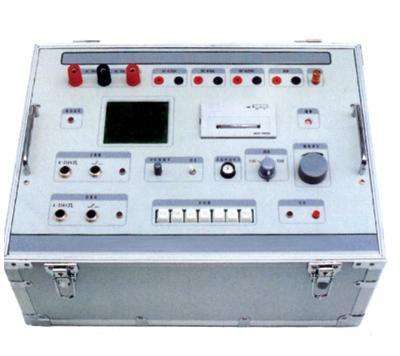
You really need to know about preventing mis-touch and mis-operation in relay protection!
Before starting relay testing with a microcomputer relay protection tester, the work leader must conduct a hazard analysis with the work team members, explain the work tasks and division of labor, indicate the work location, the surrounding operating equipment conditions, and precautions, and check whether the safety measures are arranged in accordance with requirements.
Before operating equipment, on-site commissioning personnel must verify that the equipment name matches the equipment name on the work ticket, strictly prevent entering the wrong bay, and avoid mis-operating protection. Relay personnel are not allowed to operate switch operating handles, draw-out circuit breakers, alarm buttons for grounding selection, alarms, reset buttons, trip pressure plates, fuses, voltage switching switches, etc., in substations or on-site. If it is necessary to operate the above equipment due to work needs, it must be done with the permission of the relevant operating personnel and under their supervision.
For important equipment, especially complex protections or protections with inter-trip circuits, when performing on-site inspection work, there must be approved safety technical measures and test plans, and dedicated personnel must supervise.
When relay protection personnel conduct circuit breaker transmission tests on behalf of the operating personnel, they must obtain permission and cooperation from the operating personnel; otherwise, relay personnel are not allowed to operate alone.
When working on protection panels and secondary circuit equipment, the components and terminal blocks of adjacent operating equipment on both sides must be covered with cloth curtains or insulating materials marked with "In Operation" signs to strictly prevent mis-touch, mis-operation, or falling objects such as shims or springs causing accidents.
It is strictly forbidden to drill holes on operating protection panels. When drilling near operating protection panels or performing work with vibration, anti-vibration measures must be taken, and if necessary, the relevant protection must be taken out of service.
When transporting or placing equipment in the front or rear aisles of control panels or protection panels, sufficient distance must be maintained to strictly prevent mis-touch or mis-operation of operating panels causing accidental tripping of circuit breakers.
When working on circuits where primary equipment is in operation but some protections are out of service, in addition to disconnecting the trip pressure plates, special attention should be paid to disconnecting those circuits related to operating equipment that are not controlled by the trip pressure plates. For bus differential and breaker failure circuits, double break points must be ensured. All disconnected wire ends must be properly insulated and recorded, and restored according to the records after work completion.
When testing relay secondary circuits or performing operational tests, it must be checked that the pressure plates of trip circuits and start-up circuits (bus protection, breaker failure protection, overload, etc.) related to other operating equipment's secondary circuits are in the disconnected position.
When disconnecting wires, adding wires, or conducting energization tests on the terminal blocks of operating equipment, it must be done carefully and meticulously with dedicated supervision to strictly prevent mis-touch, mis-operation, mis-wiring, or accidental disconnection of operating protection.
When working on operating protection panels or control panels, screwdrivers with less exposed conductor must be used to prevent mis-touch and mis-operation accidents.